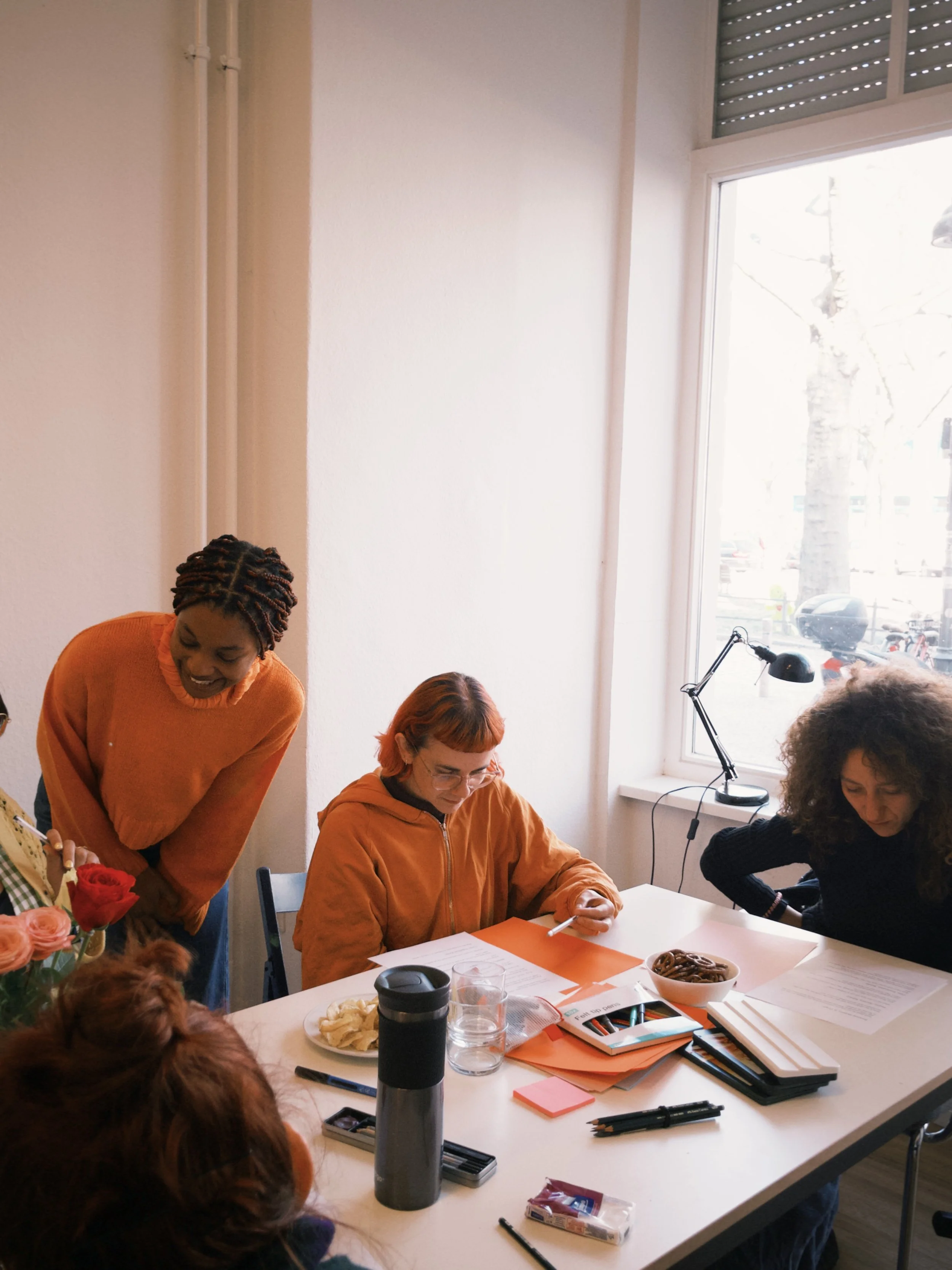
In the fall of 2025, at the beginning of what was first imagined as a passion project and would eventually become a publishing practice, a series of conversations with Pauline Gwet, founder and mother of Yes We Bleed, began to shape the core of We Who Bleed. The project emerged from a shared interest in how experiences of bleeding are carried between people, and how language can shape our relationship to the body.
We Who Bleed developed as a collection of stories that move across various voices, multi-generations, and deconlional languages. Rather than presenting one account of menstruation, the project makes room for different ways of understanding and experiencing the bleed.
The project is grounded in a collective-based workshop practice. Developed through conversation, with participants contributing their own experiences and responding to those of others. This creates an intergenerational exchange in which knowledge can move between people who are at different points in their relationship with the body. We Who Bleed is for those who experience the bleed, physically or emotionally. It is a book for children to find themselves within its pages and encounter a language that does not reproduce the shame often attached to mensturation. It is also for the adult who has carried a shame for so many decades.
Language sits at the center of the project. The words available to us shape what we are able to understand about ourselves and what we are able to share with others. We Who Bleed therefore approaches language as something that can be reclaimed. Through collaborative writing, the project asks what it means to create space for experiences that have often been left, or rewritten.
The coffee table style approach brings these conversations into a shared publication. Its multilingual structure allows stories to remain connected to the language in which they were first expressed, rather than requiring every experience to pass through a single linguistic framework.
At its core, We Who Bleed is an attempt to create a different kind of record of the body. It does not seek to define what bleeding should mean or how it should be experienced. Instead, it holds space for people to recognize something of themselves in another person's story, perhaps finding familiarity. The project remains intentionally open. We Who Bleed is not intended to offer a final account of the bleed, but to create a place where these experiences can continue to be written into the record.